

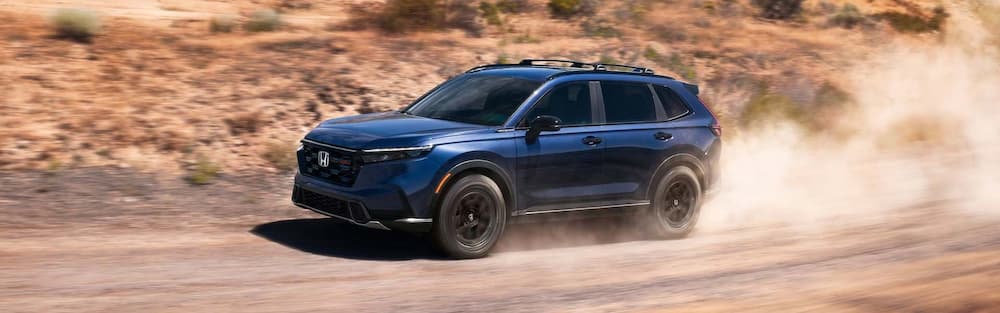
The Honda CR-V is a top choice among compact SUVs because it offers a great mix of efficiency, comfort, and everyday practicality, along with a stylish design and smooth ride. Newer CR-V models come with a continuously variable transmission (CVT) that uses a range of gear ratios instead of fixed gears. This setup gives you steady acceleration, quick power when you need it, and better fuel efficiency whether you’re driving in the city or on the highway.
What You Need to Know About the Honda CR-V Transmission
A common question from shoppers is, “Does the Honda CR-V have a CVT?” This is especially important when comparing new models to older ones. In the past, the CR-V came with manual and traditional automatic transmissions that used a set number of gears. These older systems often had more noticeable gear changes and less steady fuel efficiency.
In recent years, Honda switched the CR-V to a continuously variable transmission. This move replaced the old gear-based systems with a transmission that adjusts smoothly to how you drive. The CVT uses pulleys and a belt to deliver power more evenly, which helps with smoother acceleration and better fuel economy in daily driving.
The Honda CR-V CVT Transmission Explained
The Honda CR-V’s CVT is designed to get the most efficiency and make driving more enjoyable. Instead of using fixed gears like a regular automatic, the CVT uses pulleys and a belt that can change size, so it always keeps the engine running at the best speed for any situation.
This setup gives you smoother acceleration, but that’s just one advantage. The CVT also helps save fuel by keeping the engine at its best RPM, which means you use less gas as you drive. It also puts less strain on the engine, which can help it last longer and need less maintenance.
Comparing CVT with Traditional Automatic Transmissions
Older Honda CR-V automatics use a set number of gears, which can make gear changes feel more noticeable and sometimes abrupt. The CVT, on the other hand, doesn’t have fixed gears, so power comes through more smoothly, and driving feels more comfortable. Because it can adjust to your driving, the CVT gives you faster acceleration and better response, especially in traffic or when passing on the highway.
Driving Modes and Transmission Performance
The Honda CR-V has different driving modes that work with the CVT to get the best performance. Econ mode changes how the gas pedal and CVT respond to help you save fuel, which is great for both city and highway driving. Sport mode makes the car feel quicker and more responsive, while Snow mode helps you get better traction and control when roads are slippery.
Maintenance Tips for Your Honda CR-V Transmission
Taking care of your Honda CR-V’s transmission is important. Check the transmission fluid often to avoid problems. If the fluid is low or dirty, it can cause slipping or overheating, which may damage the transmission. Look out for warning signs like strange noises or slow acceleration. If you notice any issues, bring your CR-V to Visalia Honda for expert service.
Why the Honda CR-V is Ideal for Central Valley Drivers
The Honda CR-V is a smart choice for Central Valley drivers because it’s efficient, reliable, and flexible for all kinds of trips. Whether you’re commuting, taking a family road trip, or driving on the highway, the CR-V’s CVT gives you a smooth and efficient ride. Its roomy interior and safety features are great for families, and its good gas mileage is perfect for daily driving.
Test Drive the Honda CR-V Today
The Honda CR-V’s CVT helps you save on fuel and makes driving more enjoyable. Because it adapts to different conditions, it’s a good fit for all kinds of drivers.
If you’re shopping for a new car, take a look at the Honda CR-V. It stands out for its performance, reliability, and advanced transmission. Stop by Visalia Honda to check out our models and see why the CR-V could be the right choice for you.
Connect with us


