

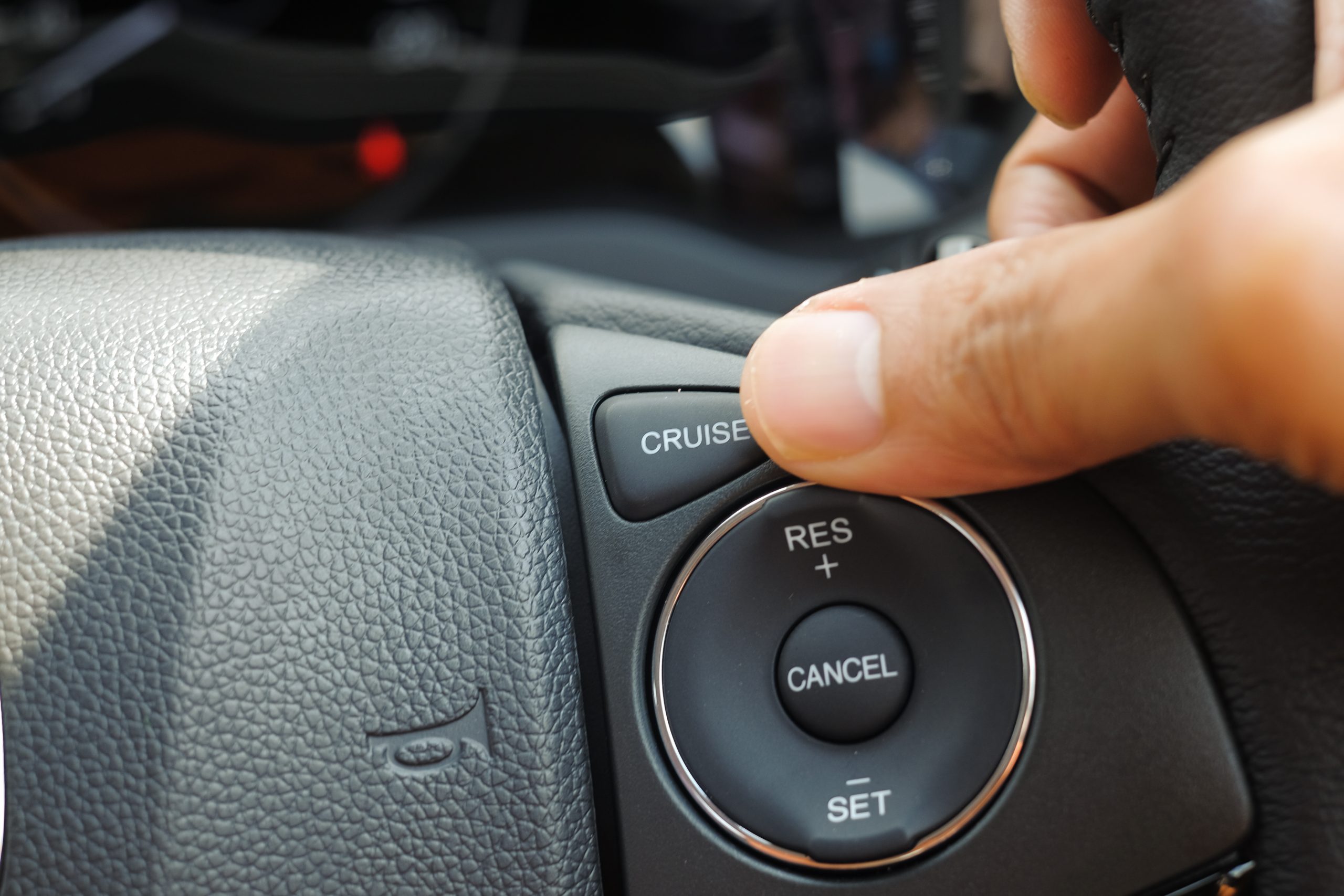
There’s a lot to think about when buying a new car, from size and model to features. If you’re considering a Honda like the CR-V, Adaptive Cruise Control (ACC) is a feature you should check out. Here’s what ACC is, which Honda models have it, how it works, and why it’s a smart addition to your next vehicle.
Highlights
- Adaptive Cruise Control lets you set your speed and following distance while driving.
- Unlike regular cruise control, ACC automatically adjusts to the speed of other cars on the road.
- ACC can make driving safer by helping reduce fatigue and lowering the risk of accidents.
What to Know About Adaptive Cruise Control
Adaptive Cruise Control (ACC) is a helpful feature that keeps a safe distance from the car in front of you. While regular cruise control keeps your car at one speed, ACC uses sensors and radar to watch traffic. If a slower car is ahead, ACC slows you down to keep a safe gap, so you don’t have to keep adjusting your speed.
The main difference between regular and adaptive cruise control is adaptability. With regular cruise control, you have to change your speed yourself when traffic slows down. ACC does this for you, so you don’t have to keep making adjustments, which makes long drives more comfortable.
How Honda Adaptive Cruise Control Works
Honda’s Adaptive Cruise Control (ACC) is easy to use and helps you focus on driving. Here’s how to turn it on and adjust it in models like the Accord, Civic, CR-V, and Pilot:
- Activation: Press the ‘MAIN’ button on your steering wheel to enable the Honda Sensing system, which includes ACC.
- Set the Speed: Once you’ve reached your desired speed, press the ‘SET’ button to maintain it.
- Adjust Following Distance: Press the ‘Distance’ button to set how far you want to be from the car in front. Your display screen will show more bars for a greater distance.
- Adjusting Speed: To change your speed, press ‘RES+’ to go faster or ‘SET-‘ to slow down.
ACC is included in the Honda Sensing suite, along with features like Lane Keeping Assist and Collision Mitigation Braking. All of these are designed to make driving safer and give you more peace of mind.
Benefits of Honda Sensing Adaptive Cruise Control
Honda’s ACC is helpful in many driving situations. On highways like 99 or 198 in the Central Valley, it handles stop-and-go traffic by adjusting your speed, which can make long drives less tiring and safer. In busy city areas like Visalia, ACC adapts to traffic flow, so you can focus on the road instead of always changing your speed. This feature makes driving easier and helps you build safer habits.
Safety Tips for Using Adaptive Cruise Control
While ACC makes driving safer and more convenient, it’s still important to stay alert. Here are some tips to use it well:
- Stay Alert: Always keep your eyes on the road and your hands on the wheel. ACC helps, but it doesn’t replace active driving.
- Be Ready to Take Control: Traffic can change fast, so be prepared to brake or speed up when needed.
- Know the Limitations: ACC might not work as well in bad weather, like heavy rain or fog, because the sensors can’t see as clearly.
Drive With Confidence Using Honda’s ACC
Honda Sensing’s Adaptive Cruise Control makes driving easier and more comfortable. It automatically changes your speed to keep a set distance from the car ahead, so you don’t have to keep using the gas and brake. This makes stop-and-go traffic and long drives feel much more relaxed.
If you want to try this technology for yourself, come take a test drive at Visalia Honda. If your Honda’s ACC needs calibration, our service team can help. Stop by Visalia Honda to learn more or book an appointment.
Frequently Asked Questions
What is Honda Adaptive Cruise Control?
Adaptive Cruise Control (ACC) is a helpful feature that keeps a safe distance from the car in front of you. While regular cruise control keeps your car at one speed, ACC uses sensors and radar to watch traffic. If a slower car is ahead, ACC slows you down to keep a safe gap, so you don’t have to keep adjusting your speed.
What is the difference between regular cruise control and adaptive cruise control?
The main difference is adaptability. With regular cruise control, you have to change your speed yourself when traffic slows down. ACC does this for you automatically, so you don’t have to keep making adjustments, which makes long drives more comfortable.
Which Honda models have Adaptive Cruise Control?
ACC is included in the Honda Sensing suite and is available on models like the Accord, Civic, CR-V, and Pilot.
Does Honda Adaptive Cruise Control work in bad weather?
ACC might not work as well in bad weather like heavy rain or fog because the sensors can’t see as clearly. It’s important to stay alert and be prepared to brake or speed up when needed regardless of conditions.
Image credit: // Shutterstock // Azami Adiputera
Connect with us


