

Honda Sensing Adaptive Cruise Control
There’s a lot to think about when buying a new car, from size and model to features. If you’re considering a Honda like the CR-V, Adaptive Cruise Control (ACC) is a feature you should check out. Here’s what ACC is, which Honda models have it, how it works, and why it’s a smart addition to your next vehicle.
Highlights
- Adaptive Cruise Control lets you set your speed and following distance while driving.
- Unlike regular cruise control, ACC automatically adjusts to the speed of other cars on the road.
- ACC can make driving safer by helping reduce fatigue and lowering the risk of accidents.
What to Know About Adaptive Cruise Control
Adaptive Cruise Control (ACC) is a helpful feature that keeps a safe distance from the car in front of you. While regular cruise control keeps your car at one speed, ACC uses sensors and radar to watch traffic. If a slower car is ahead, ACC slows you down to keep a safe gap, so you don’t have to keep adjusting your speed.
The main difference between regular and adaptive cruise control is adaptability. With regular cruise control, you have to change your speed yourself when traffic slows down. ACC does this for you, so you don’t have to keep making adjustments, which makes long drives more comfortable.
How Honda Adaptive Cruise Control Works
Honda’s Adaptive Cruise Control (ACC) is easy to use and helps you focus on driving. Here’s how to turn it on and adjust it in models like the Accord, Civic, CR-V, and Pilot:
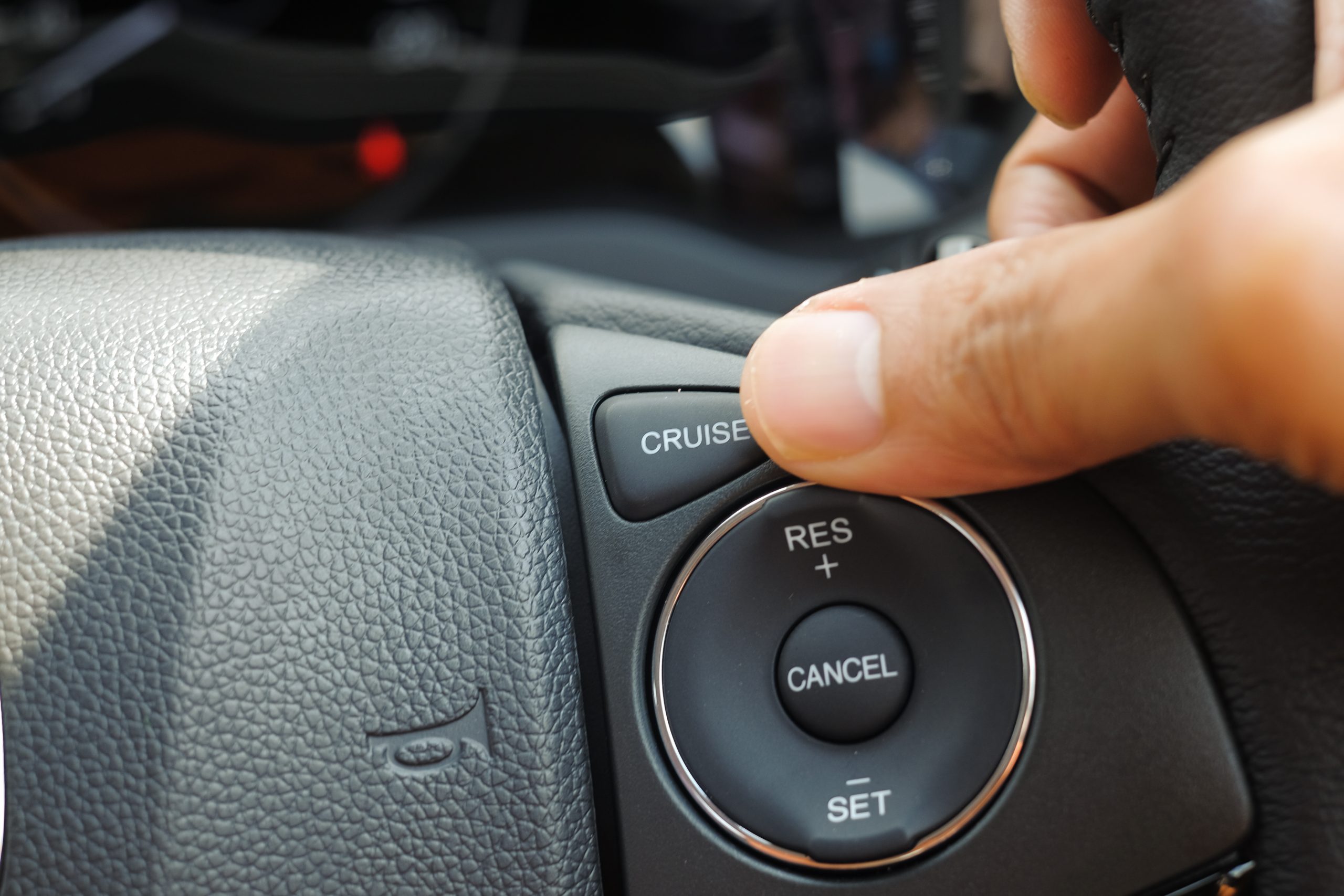
- Activation: Press the ‘MAIN’ button on your steering wheel to enable the Honda Sensing system, which includes ACC.
- Set the Speed: Once you’ve reached your desired speed, press the ‘SET’ button to maintain it.
- Adjust Following Distance: Press the ‘Distance’ button to set how far you want to be from the car in front. Your display screen will show more bars for a greater distance.
- Adjusting Speed: To change your speed, press ‘RES+’ to go faster or ‘SET-‘ to slow down.
ACC is included in the Honda Sensing suite, along with features like Lane Keeping Assist and Collision Mitigation Braking. All of these are designed to make driving safer and give you more peace of mind.
Benefits of Honda Sensing Adaptive Cruise Control
Honda’s ACC is helpful in many driving situations. On highways like 99 or 198 in the Central Valley, it handles stop-and-go traffic by adjusting your speed, which can make long drives less tiring and safer. In busy city areas like Visalia, ACC adapts to traffic flow, so you can focus on the road instead of always changing your speed. This feature makes driving easier and helps you build safer habits.
Safety Tips for Using Adaptive Cruise Control
While ACC makes driving safer and more convenient, it’s still important to stay alert. Here are some tips to use it well:
- Stay Alert: Always keep your eyes on the road and your hands on the wheel. ACC helps, but it doesn’t replace active driving.
- Be Ready to Take Control: Traffic can change fast, so be prepared to brake or speed up when needed.
- Know the Limitations: ACC might not work as well in bad weather, like heavy rain or fog, because the sensors can’t see as clearly.
Drive With Confidence Using Honda’s ACC
Honda Sensing’s Adaptive Cruise Control makes driving easier and more comfortable. It automatically changes your speed to keep a set distance from the car ahead, so you don’t have to keep using the gas and brake. This makes stop-and-go traffic and long drives feel much more relaxed.
If you want to try this technology for yourself, come take a test drive at Visalia Honda. If your Honda’s ACC needs calibration, our service team can help. Stop by Visalia Honda to learn more or book an appointment.
Frequently Asked Questions
What is Honda Adaptive Cruise Control?
Adaptive Cruise Control (ACC) is a helpful feature that keeps a safe distance from the car in front of you. While regular cruise control keeps your car at one speed, ACC uses sensors and radar to watch traffic. If a slower car is ahead, ACC slows you down to keep a safe gap, so you don’t have to keep adjusting your speed.
What is the difference between regular cruise control and adaptive cruise control?
The main difference is adaptability. With regular cruise control, you have to change your speed yourself when traffic slows down. ACC does this for you automatically, so you don’t have to keep making adjustments, which makes long drives more comfortable.
Which Honda models have Adaptive Cruise Control?
ACC is included in the Honda Sensing suite and is available on models like the Accord, Civic, CR-V, and Pilot.
Does Honda Adaptive Cruise Control work in bad weather?
ACC might not work as well in bad weather like heavy rain or fog because the sensors can’t see as clearly. It’s important to stay alert and be prepared to brake or speed up when needed regardless of conditions.
Image credit: // Shutterstock // Azami Adiputera
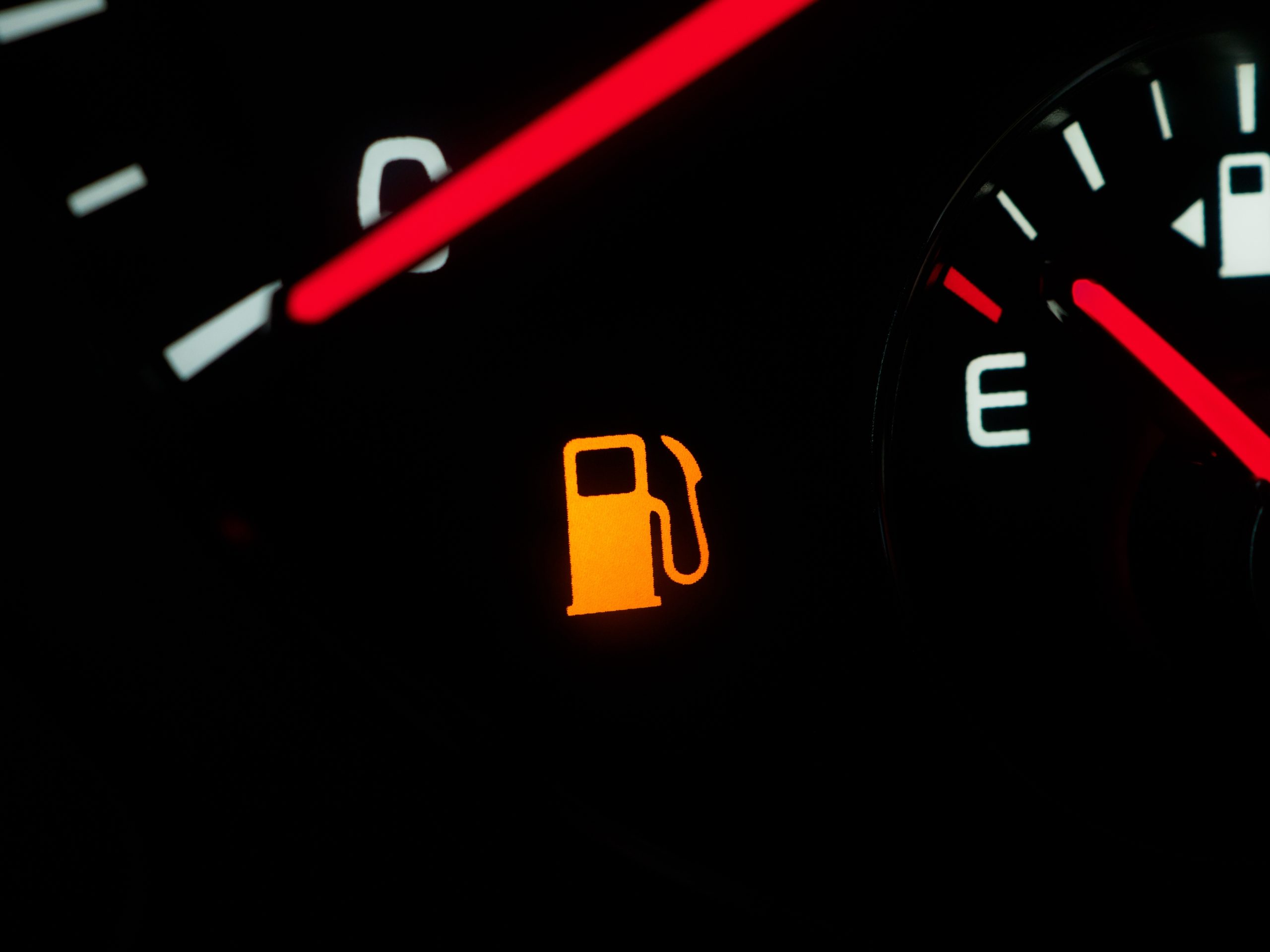
The “Low Fuel” light always seems to show up when it’s least convenient. Some drivers pull over right away, while others keep going. If you’re looking for a new car, this moment is important because it shows how a car warns you about risk and how reliable its range feels each day.
Many Honda shoppers and owners wonder about the CR-V’s low fuel warning light: how far can you really drive once it turns on? Some people fill up right away, while others think they have plenty of miles left. So, who’s correct when it comes to the CR-V’s low fuel warning?
Learn what the warning means, how to estimate your remaining distance using the tools in the cabin, and when it is smart to stop pushing your luck.
Understanding the Honda Fuel Reserve System
Honda cars have a fuel reserve that kicks in when the low fuel light comes on. This acts as a buffer, not an extra tank. In most Hondas, the warning shows up when there are about 1 to 2 gallons left, but the exact amount depends on the model and year.
Still, it’s not a good idea to rely on the reserve for long drives. It’s meant for short-term use only. In the city, the extra fuel might seem like enough, but on longer or unfamiliar roads, it can run out faster than you think.
Average “Miles Left” Estimates for Popular Honda Models
How far can you drive a Honda after the low fuel light comes on? It depends on the model, engine size, and year. On average:
- Honda Civic: Often has 30–50 miles left after the light comes on, thanks to excellent fuel efficiency.
- Honda CR-V: Typically offers around 35–45 miles, depending on whether it’s AWD or FWD.
- Honda Accord: Usually falls in the 40–50 mile range, especially in newer models.
- Honda HR-V: Similar to the Civic, with about 35–45 miles remaining.
- Honda Pilot: As a larger SUV, expect closer to 25–35 miles.
Newer Hondas usually give more accurate fuel estimates, while older models might warn you earlier than needed.
Why do these ranges vary? Things like model year, engine, drivetrain, tire size, and even how the car was set up can affect when the light comes on and how fast the last fuel is used. If you’re comparing cars, use these numbers as a guide, not a guarantee.
Factors Affecting Driving Distance on Low Fuel
How you drive makes a big difference in how far you can go on low fuel. Quick starts and lots of braking use more gas than smooth, steady driving.
The type of road matters too. Flat city streets are easier on your car, but hills and curvy highways use more fuel. The weather also plays a part. Cold can lower fuel efficiency, and extreme heat puts extra strain on your car.
Driving mode also affects fuel use. Econ Mode helps you save gas by making the car run more efficiently. Sport Mode uses more fuel for extra power. If you’re running low, it’s best to use Econ Mode.
Using the Trip Meter and “Distance to Empty” Display
Honda provides tools to help you keep track. If you reset your trip meter each time you fill up, you’ll start to see your own fuel use patterns. Soon, you’ll know about how many miles you get per tank.
Many newer Hondas show you how many miles you have left with a “distance to empty” display. This number changes based on how you’ve been driving. Things like hills, traffic, or a new driving style can make it drop fast. Use it as a guide, not a guarantee.
Safety Concerns and Risks of Driving on Empty
Driving with almost no fuel isn’t just a hassle; it can actually damage your car. The fuel pump needs gasoline to stay cool, so running low too often can cause it to overheat and lead to expensive repairs.
You could also end up stranded, especially on rural roads near Visalia or heading to Sequoia National Park, where gas stations are few and far between. A small mistake here can turn a nice drive into a long wait for help. Knowing your Honda’s fuel reserve is just as much about safety as it is about saving money.
If you want extra peace of mind, visit us at Visalia Honda for a fuel system check or to look at fuel-efficient Honda models. Reach out to us to get started.
Frequently Asked Questions
How far can you drive a Honda after the low fuel light comes on?
It depends on the model, engine size, and year. On average: Honda Civic offers 30–50 miles, Honda CR-V typically offers around 35–45 miles depending on whether it’s AWD or FWD, Honda Accord usually falls in the 40–50 mile range, Honda HR-V has about 35–45 miles remaining, and Honda Pilot offers closer to 25–35 miles as a larger SUV.
What does the Honda low fuel warning light mean?
Honda cars have a fuel reserve that kicks in when the low fuel light comes on. This acts as a buffer, not an extra tank. In most Hondas, the warning shows up when there are about 1 to 2 gallons left, but the exact amount depends on the model and year.
Does driving mode affect how far you can go on low fuel?
Yes. Econ Mode helps you save gas by making the car run more efficiently. Sport Mode uses more fuel for extra power. If you’re running low, it’s best to use Econ Mode.
Can driving on empty damage your Honda?
Yes. The fuel pump needs gasoline to stay cool, so running low too often can cause it to overheat and lead to expensive repairs.
Image credit: // Shutterstock // Rohane Hamilton
What Does Sport Mode Do in Your Honda Vehicle?
Sport Mode makes Honda vehicles feel more responsive and sporty by changing how the throttle, transmission, and steering work. If you’re visiting a Honda dealership and comparing models, knowing about these features can help you see how each car handles daily driving. Real-world use of Honda Sport Mode shows that you get faster acceleration, better control, and when it’s best to use a gentler touch for safety.
What Does Sport Mode Do in a Honda? Honda Sport Mode Explained
Sport Mode in Honda vehicles improves your drive by adjusting important performance features. When you turn it on, the throttle responds faster, so you get quicker acceleration and a more energetic ride. The transmission also changes, keeping the engine at its best for longer, which is great when you need extra speed, like merging onto a highway.
The steering also becomes firmer, giving you a more direct and precise feel. This helps you stay in control, especially on winding roads or when you want a more spirited drive. Sport Mode doesn’t increase the engine’s horsepower, but it uses the available power more effectively for a more exciting experience.
When drivers understand these changes, they can see how Sport Mode improves their Honda’s handling and makes every drive more enjoyable.
Honda Models Featuring Sport Mode
Several Honda models offer Sport Mode, and each one uses it to improve the driving experience. The Accord and Civic, which are already sporty, feel even more responsive with Sport Mode as it adjusts the throttle and shifting. The CR-V and HR-V, which are versatile SUVs, become more lively for both city and highway driving. The Pilot, a larger SUV, feels more agile and confident with Sport Mode. Some models also have paddle shifters, so you can take more control of the drive.
Comparing Honda Driving Modes: Honda Sport vs Econ Mode and Normal
Honda vehicles have three driving modes to fit different needs. Normal Mode gives you a balance of performance and efficiency for daily driving. Econ Mode helps save fuel by changing how the throttle and air conditioning work, which is great for city trips or long drives. Sport Mode is focused on performance. It makes the throttle more responsive, changes gears faster, and improves steering for a more exciting drive. Just remember, Sport Mode can use more fuel than the other modes.
When to Use Sport Mode Safely
Learning when to use Sport Mode in your Honda lets you enjoy better throttle, transmission, and steering while staying safe. It’s helpful for merging onto highways because it gives you the acceleration you need. On curvy roads, the improved steering and throttle response make driving more fun. Sport Mode also helps on hills by keeping control and momentum. But you should avoid using it on slippery or icy roads, since the extra throttle response can make it harder to keep traction. In those cases, it’s safer to use Normal or Econ Mode.
Enjoying Sport Mode on Central Valley Drives
The open highways and scenic roads in the Central Valley are perfect for trying out Sport Mode. Whether you’re driving in Visalia or exploring the area, Sport Mode makes your trip more fun and lets you enjoy your Honda’s performance.
Test Out Sport Mode at Visalia Honda
Sport Mode in your Honda improves your drive by adjusting the car’s features. It makes the throttle respond faster, changes how the transmission shifts for a sportier feel, and tightens the steering for better control. This makes every trip more exciting. While it doesn’t add more horsepower, it helps you get the most out of your Honda’s power, which is great if you enjoy a lively drive.
If you want to try Sport Mode, take a test drive in a Honda that has it and see the difference yourself. Whether you’re driving on Central Valley highways or looking for a more exciting drive in town, Sport Mode gives you a new way to enjoy your Honda.
To experience Sport Mode firsthand or ensure your vehicle is in top shape, visit Visalia Honda. Our team is ready to assist with a test drive or a service check. Find us at 1016 S Ben Maddox Way, Visalia, CA 93292-3657, or contact us online. Discover how Sport Mode can transform your driving experience today!
Frequently Asked Questions
What does Sport Mode do in a Honda?
Sport Mode in Honda vehicles improves your drive by adjusting important performance features. When you turn it on, the throttle responds faster, so you get quicker acceleration and a more energetic ride. The transmission also changes, keeping the engine at its best for longer. The steering becomes firmer, giving you a more direct and precise feel. Sport Mode doesn’t increase the engine’s horsepower, but it uses the available power more effectively for a more exciting experience.
Which Honda models have Sport Mode?
Several Honda models offer Sport Mode including the Accord, Civic, CR-V, HR-V, and Pilot. The Accord and Civic feel even more responsive with Sport Mode, the CR-V and HR-V become more lively for both city and highway driving, and the Pilot feels more agile and confident. Some models also have paddle shifters for more control.
What is the difference between Honda Sport Mode, Normal Mode, and Econ Mode?
Normal Mode gives you a balance of performance and efficiency for daily driving. Econ Mode helps save fuel by changing how the throttle and air conditioning work, which is great for city trips or long drives. Sport Mode is focused on performance. It makes the throttle more responsive, changes gears faster, and improves steering for a more exciting drive. Sport Mode can use more fuel than the other modes.
When should you not use Sport Mode in a Honda?
You should avoid using Sport Mode on slippery or icy roads, since the extra throttle response can make it harder to keep traction. In those cases, it’s safer to use Normal or Econ Mode.
Image credit: // Shutterstock // Cahyadi HP
Hello world!
Welcome to WordPress. This is your first post. Edit or delete it, then start writing!
Connect with us


